“Undesign” Your Portfolio Website
Even the most ineffective, unattractive or simple of man-made objects have been designed in some way. The same is true for the Web: Even the most hideous of websites are created by someone who has consciously made decisions into its design.
For web design professionals, it’s normal to put a lot of work into a design, using research, analysis and their expertise to form a design to delight and engage. This process is not quick and while many of us spend hours crafting websites for clients, our own website goes wanting.
It’s in this situation that the process of undesign is growing.
Undesign 101
I associate "undesign" with websites where the design and content is scaled back to the bare necessities, allowing for the quick implementation of a simple yet professional design.
So far, only a small group of designers have adopted such an approach, so how undesign is defined in the future will inevitably change as more of us experiment with it.
Looking at an undesigned website, it may appear to be an application of minimalism to its extreme.
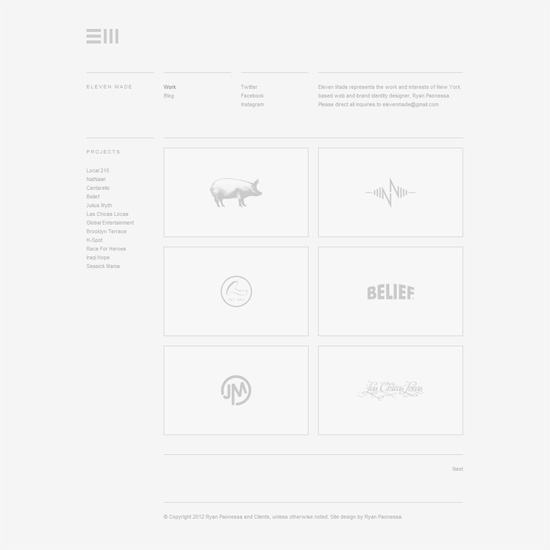
Eleven Made, portfolio of NYC-based web and brand identity designer Ryan Paonessa.
Though an undesigned website can be identified by what you can (or can’t) see, it’s also about the process and the choices made by the designer that defines it.
Why Undesign?
Let’s discuss some of the pros of creating an undesigned site.
Easier to Create and Change
Designers typically redesign their website for one of two reasons. Firstly, their site no longer fulfills the objectives they wish it to. Secondly, they wish to change the design because they’ve grown bored of it.
No matter the reason, many full-time designers find it difficult to devote much time to changing the design of their website. To create a design and then deploy it is no quick task and, with so much else going on, it can be hard to find the time to speedily make the redesign happen.
By scaling back the complexity of the design, and the scale of the website as a whole, a once lengthy process can become much shorter, with the workload greatly reduced.
Easier to Make Responsive
Responsive design is still in its early days. This has, to a certain extent, made undesign a more desirable option as the rich interfaces we once created are even more complex to achieve when trying to make a responsive website.
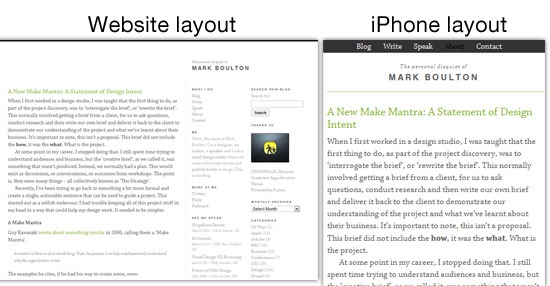
Mark Boulton’s website has a responsive layout.
With responsive design seen as a must for any designer’s new website, the time that can be devoted to the design itself is further reduced and thus the design is more undesigned than it may have been without the addition of making it responsive.
When You Don’t Need to Show Off
For some designers, their work and reputation are so well known within the community that they don’t need an elaborate web design to impress potential clients.
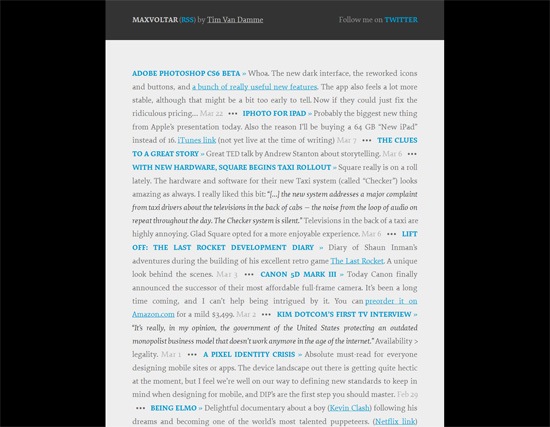
Max Voltar is the site of well-known designer Tim Van Damme.
Some other reasons for going the undesign route are:
- You’re a full-time designer: A designer that works full-time for an agency may only need a site as a repository for thoughts and their personal work.
- You have a high volume of clients: A designer can be booked up with so much work that they are no longer actively looking to be hired by more clients. So their site, like a full-time designer, is not essential in gaining work.
- You have a strong portfolio: A designer may feel their portfolio is strong enough to speak for itself without the need to utilize their own site as an extension of their portfolio.
Undesign May Not Be Your Client’s Cup of Tea
The way you design your website can be viewed as an extension of your work portfolio, a way to show off your personality and skills. The design flourishes we add to our sites are the products which sit in the window showing, the type of designer we have become and the level of our skills.
So why would you employ a stripped back design in your portfolio site if you want to display your design capabilities? A professional is able to recognize a well-crafted, well-thought-out minimal design against something that’s just hastily put together. But for most clients, the distinction isn’t always obvious.
Instead, a client viewing an undesigned website might see a website that may appear to contain no show of exceptional skill and a website that lacks personality and any element of uniqueness.
As a design style, undesign is not like the rest. Undesign will, at least for the time being, may only ever find a home on the website of a web professional. The reason undesign might not be suitable for client work is that it’s difficult to find a client open-minded enough to consider such a stripped-down design approach.
Undesign could find its way on personal websites, but non-designers are more likely to be attracted to more complex designs.
Examples of Undesigned Websites
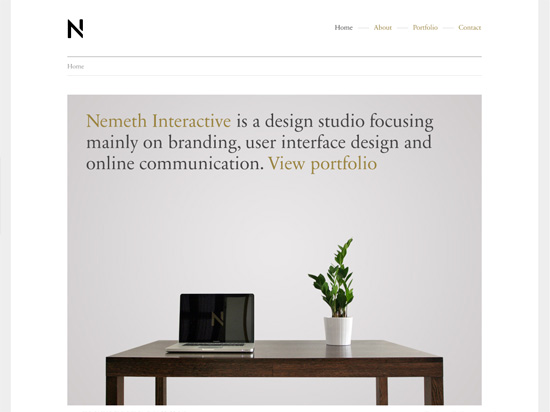
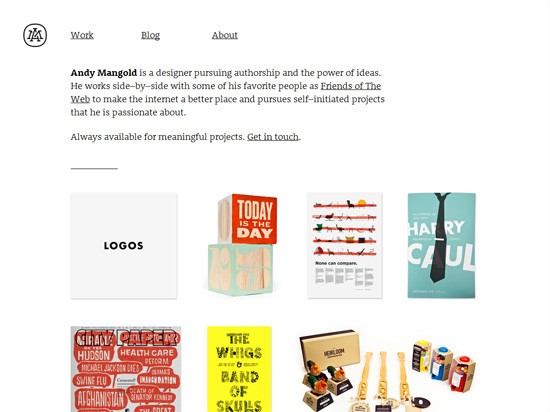
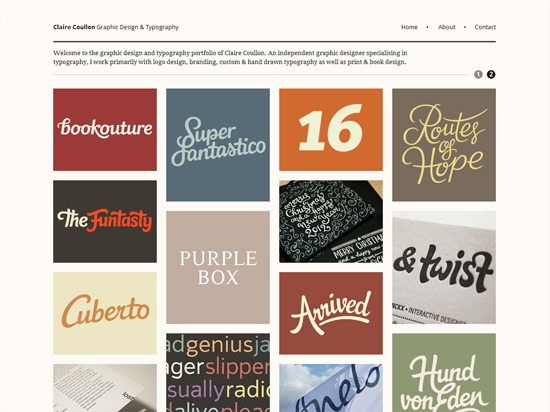
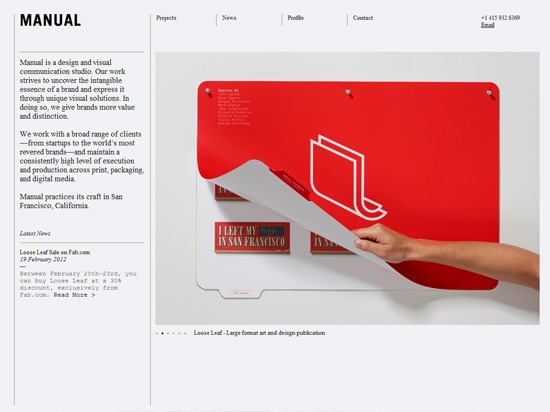
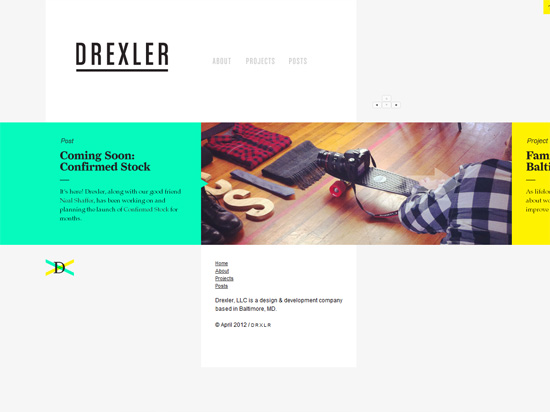
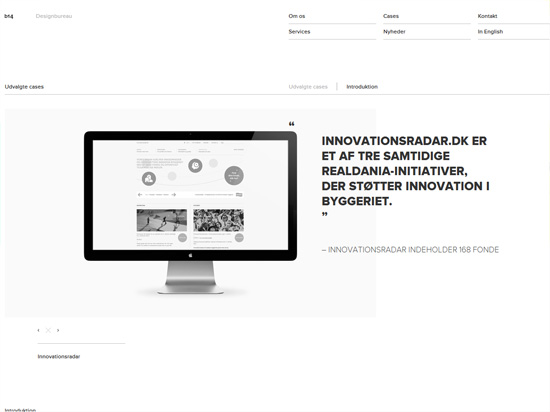
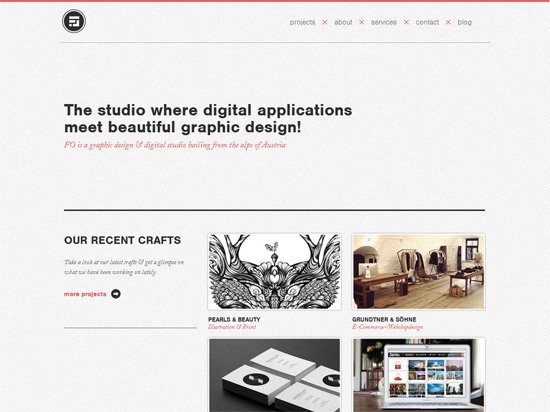
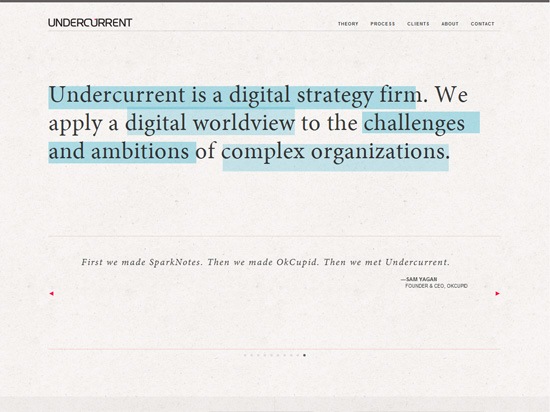
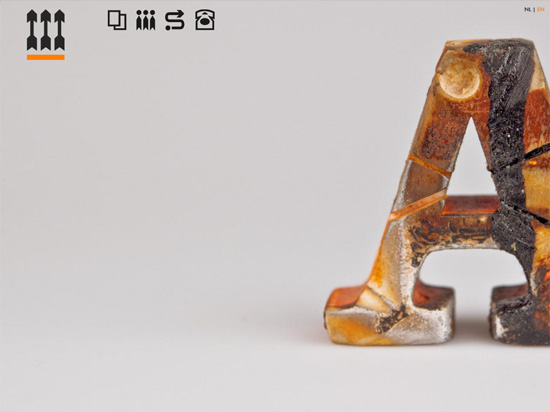
For inspiration, here are some more examples of undesigned portfolio sites.
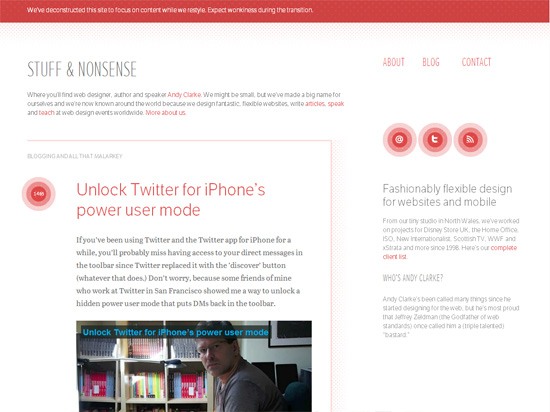
Stuff & Nonsense (Andy Clarke)
Just Another Trend?
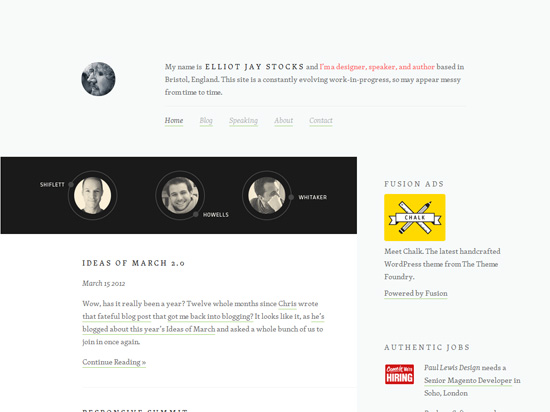
The idea of undesign seems to be so new to the community that it could just become yet another trend that disappears in a year or two. The fact that high-profile designers like Elliot Jay Stocks, Mark Boulton and Tim Van Damme have adopted such an approach for their own sites will most certainly lead to others considering the same approach for their website.
A trend in web design is something that many designers grow quickly excited about but, by over-adoption or on questioning the reasons behind its use, soon falls out of favor. Think of the glossy "Web 2.0" look or faux coffee rings that came and went. The reasons behind using these styles and effects in our designs, in many circumstances, were weak at best.
Though time will inevitably dictate whether undesign sticks around for the long haul, I don’t think it can ever be considered as just a trend as I believe that it will always be a style that designers can adopt in situations where time is at a premium.
Related Content
- Five Popular Design Portfolio Website Styles
- 4 Steps to Building a Portfolio Website Using Drupal
- Design a Minimal and Modern Portfolio Layout with Photoshop
- Related categories: Web Design and Project Management


57 Comments
Nauman
April 2nd, 2012
Love the concept, though undesign are my favorite designs now, nice post.
Tayo
April 3rd, 2012
I agree. Personally I refer to such designs as “classic” or “timeless” because they are not necessarily trendy, but are able to effectively accomplish what they are built for, while still retaining a certain aesthetic quality.
Prasad Pawar
April 3rd, 2012
Undesigned means minimal Design….
Great collection of minimal Design.
Madan Patil
April 3rd, 2012
Nice trend/concept bring in light.
I think “Undesign” is the one of the other form of minimalistic designs. If you are a designer you can understand how hard to be simple. Actually simple designs needs more of thinking.
Thank you for this article.
Helen
April 3rd, 2012
In the recent past I’ve not been a fan of this style, but I do like Clair Cullen and Stuff & Nonsense in the examples above.
Tim
April 3rd, 2012
Undesign is just good non intrusive design. It is as simple as that.
Jane Hooper
April 3rd, 2012
Interesting article and good examples, thanks for this. Have bookmarked!
Daniel
April 3rd, 2012
Undesign? Everything you’ve mentioned above is minimalism. Why coin a new term for it? It’s a potentially harmful misnomer – how are clients going to value something you’ve have labelled as lacking the one task you’re actually performing?
What?
April 3rd, 2012
“Undesigned”?
This is just dimwitted, backwards bullshit in an attempt to put a label on something, and quite contrary to what your claim that “only a small group of designers have adopted.”, virtually every independent designer out there puts this into practice. The good ones at least.
It’s logical, practical minimalism. Nothing more, nothing less.
Get it right.
Look at every folio host or CMS out there. Cargo Collective, Indexhibit, Behance.
Minimalism.
Not “undesigned”.
adumpaul
April 3rd, 2012
Nice works.Nice collection of well design portfolio.Thank you very much.
Kerrick Long
April 3rd, 2012
I “undesigned” my photography portfolio website from the beginning. It really makes the photos stand on their own and speak for themselves, to use a couple clichés.
Paul Murray
April 3rd, 2012
I’m a fan of simple, clean layouts when it comes to portfolios. I try and strip my own back as much as I can to put the emphasis on my content.
I think there needs to be a little give though, especially if you want an engaging blog too, as a site that’s too minimal can come across as a little ‘cold’ and could turn visitors away.
PXLated
April 3rd, 2012
I’m not sure any of your examples are “undesigned”. They may be minimal, clean, and efficient in style but all have been “designed”. Am also not sure it saved anyone time. They probably labored over the look/feel/strategy just as much as if the sites had been styled a little more complexly.
Simplicity != Simple
Michiel
April 3rd, 2012
Good article, only the notion of Undesign I dont really get it. I mean, every one of your examples has been designed with great eye for detail. You give the impression that it’s easy to do make a minimal design.
Keep it up!
Navigator Multimedia
April 3rd, 2012
Nice article. I see from your examples that the principles of undesign differ from minimalism, and that the two should be distinguished. However, like minimalism, it seems that undesign cannot be scoffed at as a trend, but as you said, ” a style that designers can adopt in situations where time is at a premium,” or when the design process becomes overwhelmed by content and needless elements. It creates an exercise in mindful design for user experience.
Thanks again,
Sarah Bauer
Navigator Multimedia
ls
April 3rd, 2012
You can’t possibly think it takes less time to design any of these sites. It’s called good design, not undesign.
Kevin Soon
April 3rd, 2012
To many visually heavy designers, this article would seem a bit poignant – but I couldn’t agree more with the concept of “undesigning”. I’ve tackled this debate numerous times while re-designing my own portfolio, only to come to the conclusion that less is certainly more. No texture, no patterns, no intensive backgrounds, just straight content and focus – give the work some weight. While I still see very impressive sites that are far from lacking detail, I suppose designers can go a number of ways: 1) Make it heavy to represent myself, 2) Make it light to emphasize my work, 3) Do both.
Then again, perhaps it’s all an exercise of simplification that tends to come at the price of holding back on the extra design goodies :) Great article!
Owen
April 4th, 2012
I agree with a lot of people here – Undesign? What a crazy thing to call it! It’s simple minimal design and takes a lot of skill and time to pull it off well. Anyone can ‘undesign’ a layout but it doesn’t necessarily look good and isn’t worth paying for. The examples you’ve shown are excellent examples of good, clean minimal design but in calling it ‘undesign’ you devalue their efforts and play into the hands of those who don’t understand and don’t want to invest. Agh.
uncomment
April 4th, 2012
I believe the term ‘undesign’ is a bit misleading here.
These designs require taste, craft and time to implement.
fowziey
April 4th, 2012
I just couldn’t associate the term ‘undesigned’ with most of the examples unless you show ‘plain’ websites along with this great article.
Paul Macgregor
April 4th, 2012
Design does not equal decoration.
Chris Trude
April 4th, 2012
I agree with ls and others. There is no such thing as ‘undesign’ unless you strip the css and let the site rely on good hierarchy. All you are showing here is minimalist designs. This article is wrong.
Ann
April 4th, 2012
This is what I’ve been using for several years. I just want to give them an idea of what I do , hopefully they will want more information and contact me directly. In my field inspiration is formed when I meet with the client in their atomsphere.When I can really show them the potential of their own space, not those I’ve done for others.
Fred
April 4th, 2012
To any designer, designing a clean,functional and unobtrusive site is harder than putting together one with all the “frills”, because the process of trimming down the non-essentials is the hardest and excruciating experience any seasoned designer can imagine.
Michael Dowell
April 4th, 2012
I’d have to say “Undesign” is very misleading and a terrible term. It makes it sound as though design hasn’t been considered. A portfolio site should be spacious, uncluttered and allow for the work to do the talking. On a portfolio site the work needs to have center stage not the surrounding furniture. Secondly the site needs to be a elegant and effortless experience.
I would disagree that any of these sites are more time effective to create either. A lot of consideration goes into these sophisticated sites.
It’s a nice range of sites put together just with the wrong title. All these sites have been well designed with many experienced considerations made. Just because they look clean, spacious, white doesn’t mean they are not highly designed.
13
April 4th, 2012
Socket Studios Socket Studios Socket Studios Socket Studios Socket Studios Socket Studios The Best of All Time Socket Studios Socket Studios Socket Studios
Omiga Pun
April 5th, 2012
Undesign would be not using a style sheet!
These are just very good examples of minimalism.
Thanks.
Cheryl M
April 5th, 2012
An online portfolio could be thought of as an art gallery, with walls that are traditionally austere to maximize the emphasis of the artwork displayed.
Patrick King
April 5th, 2012
The most beautiful and minimal of designs are the most difficult to pull off. Even just caressing the balance of negative and positive space requires an eye and sensibility that the over designers out there will never possess.
Very well curated collection by the way.
Shannon
April 5th, 2012
I’ve been toying with what direction to go with designing/rebuilding my portfolio site as well. My site first went up a year ago, I cleaned it up 10 months later because I disliked what I had originally, and now I’m struggling with 1) do something clean, minimal, “undesigned” that I will, at least, be ok with for a while or 2) design something that really shows off my personality.
How does one balance “undesign” without losing ones sense of individuality?
Jared Erondu
April 5th, 2012
I completely agree with the “undesign” method. Personally, the first one is my favorite. Sometimes, as designers, we tend “over design” our own site. We know what to do with others (clients), but our own ends up looking like crap.
Finding out the bare necessities for your page and adding simple, yet nice, colors and CSS3 will usually do the trick. I don’t know. Maybe I’m just in love with simplicity! lol
Frank
April 5th, 2012
I just redesigned my blog (http://frank.is), and achieving results like these was my goal from the start. Letting the content speak for itself is more important than showing that you know how to add Layer Styles in Photoshop.
mike
April 5th, 2012
I imagine the term “undesign” will not be liked by many designers. It seems to communicate lack of design which is simply not the case. Great article but overshadowed by a word that undermines the entire process.
Colin Davis
April 5th, 2012
I also agree with the statements that calling this “undesign” is both incorrect and somewhat insulting to the designers that put time into these designs.
True Undesign is random – literally letting the items flow, fall, spread wherever they may. This is, as others have noted, minimalism. There are tight grids on almost everything you listed here. That is designed.
Colin
David Hickox
April 5th, 2012
This whole post is just an April Fool’s joke that got posted a day late, right?
Jean W
April 6th, 2012
Undesign meens nothing! Everything presented here IS design! Have you ever heard about history of design? It’s good that you discover some different ways of creating a design (for each goal an other design), but nothing to deal with a new trend (!!!).
In a way “undesign” was applied to a certain swiss or dutch approach of design in contemporary design. You can see that kind of “non” design for contemporary art centers or designers portfolio (http://www.fageta.ch). It means design something that looks non design, so impersonal or poor types,
picture placement that looks odd, unthought (but it is thought! Very precisely! ooh yes!). I think it’s a mix between the fascination of the early art code, and the underground art scene of the past decade. I think it’s a sort of manierism, a hillness of a lot of great european graphic designers that hav’ent finished to digest what they’ve seen 20 years ago.
But I’m happy to see that webdesigners start to think about real design and discover that design has an history! And that they’re something to learn about
it! ;-)
Sztuka Fabryka
April 6th, 2012
Undesign sounds like the “Deconstruct To Construct” concept of the artist Sztuka Fabryka whose website has been undesigned for many years http://www.sztuka-fabryka.be
Once the texts on the site had no capitals, “,” and “.” only “/”. But guess that was just to much.
Productfotografie
April 6th, 2012
“Undesign May Not Be Your Client’s Cup of Tea” is something to always keep in mind. You might want to make a site that will impress your fellow designer friends, but that may not be your target audience.
Which could be a small business owner, a marketing person or a manager who does not really “get” what you are trying to achieve.
That being said, only a few sites shown here are really “undesigned”.
Most of the work shown here seems carefully designed. Minimal yes, but undesigned certainly not.
Nguyen Minh Khoi
April 6th, 2012
I agree so we don’t need to focus so much on portfolio. I love clean design, also be a fan with responsive design.
can ari
April 6th, 2012
Not something new. This is minimalism. It’s a neo modern approach to design. Only people who have a design culture that is solely based on trends will think it a trend and a new one. The reason there are less of such is that very few people like something that doesn’t boast pictures and effects. Which is why actual designers are pushed towards creating the anonimously gaudy and playful things on web.
Undesign is also not new. But it should look much more crude than these. As it’s a protest in a way.
Mohit Bumb
April 6th, 2012
Nice revision :p
Kellie
April 6th, 2012
Really like this whole direction. Definitely has me thinking.
What? 2
April 6th, 2012
This is nothing new!!
Anne
April 6th, 2012
This article is disappointing. Although these may seem like it is minimalist and simple they are anything but. “Scaled back to the bare necessities” doesn’t mean less time, it means the designers need to focus more on the small details and grid. Also, all these examples are the same as being minimalist.
Nikita
April 6th, 2012
Why do so many people think that it is necessary to use white as the background in order to have a minimal design?
(Yes, I am referring to the examples on this page.)
I feel like often it just takes away personality and makes your site blend in with all the other “minimal” or “undesigned” sites.
Bilby
April 8th, 2012
@What?
Minimalism has been with us through the ages. Why not try for a bit in your comments.
These days of technical abundance foster misuse of design, and call for some other definition of what it might mean, even if “undesign” sounds a little ungainly.
Offer something positive for your trouble taken in writing.
Lee
April 9th, 2012
This article shows a very nice collection of minimal website designs, farmed from thebestdesigns.com as far as I can tell. It’s true that the very best design work is invisible to the user. It just does it’s job perfectly, but ‘Undesigned” is a silly term.
By their very nature minimal designs show more of an understanding of basic fundamental design principles (space, contrast, colour, typography) than over designed, trendy, quirky websites. “Undesigned” is an insult to this. They’ve simply been designed very well, without caving in to the urge to shock and impress their potential customers.
Lee
April 9th, 2012
Oh, and it takes ages to create an original minimal design properly. Minimal design is harder to get right in my opinion and doesn’t make responsive design much easier either.
April Greer
April 9th, 2012
I agree with PXLated – these sites are far from “undesigned.”
I’d argue that each of these sites took as much time (or more) to create. They just operate on Michelangelo’s philosophy of being done when there’s no more left to take away rather than add.
These sites are examples of minimalism, not “undesigned.” Terrible word, too, as you’re making it sound like it took no talent to create and implying it would be cheap and easy to make.
Mrinal
April 9th, 2012
Nice example of webdesign portfolio, I like those as well.
Rakesh
April 10th, 2012
I wasted my time reading this article.
BCNI
April 10th, 2012
Never heard of “undesign” before reading this post. I know the minimalist design. You can’t apply this concept to every type of website, in my opinion this concept can be applied to small websites.
Maria
April 10th, 2012
Hm… I dunno… those sites seemed pretty “designed” to me. They also looked like they took as much time as a “regular” designed site (whatever THAT is). Guess it’s time for a new trendy word for “minimalist design”.
…and of course I love jobs where I get 5 lines of text and loads of space. Sure makes “undesigning” easier!
Bjørn Høydal
April 10th, 2012
Lovely collection of sites. Otherwise I think Lee hits the nail on the head: These are simply well thought out and competently designed layouts. I’ve been trying to master this craft or the last 20+ years. Perhaps it would be more correct to replace “undesigned” with “uncluttered”?
Dominique Tcherdyne
April 12th, 2012
“Simplicity is the ultimate sophistication” (Leonardo da Vinci)
The examples show minimalistic webdesigns. Minimalistic design has nothing to do with no design at all. Minimalistic design requires a lot of experience, a lot of time and a great artistic sense.
An “undesigned” website would include only elastic html text, no CSS, no javascipt, nothing. Just awful.
Shingo Tamura
April 14th, 2012
Love the colours on the Claire Coullon’s site. Most of the others are nice too.
Total Bounty
April 16th, 2012
It’s funny that the shadowed effect was all the rage not too long ago – isn’t it? It just proves that sometimes less is more…
Leave a Comment